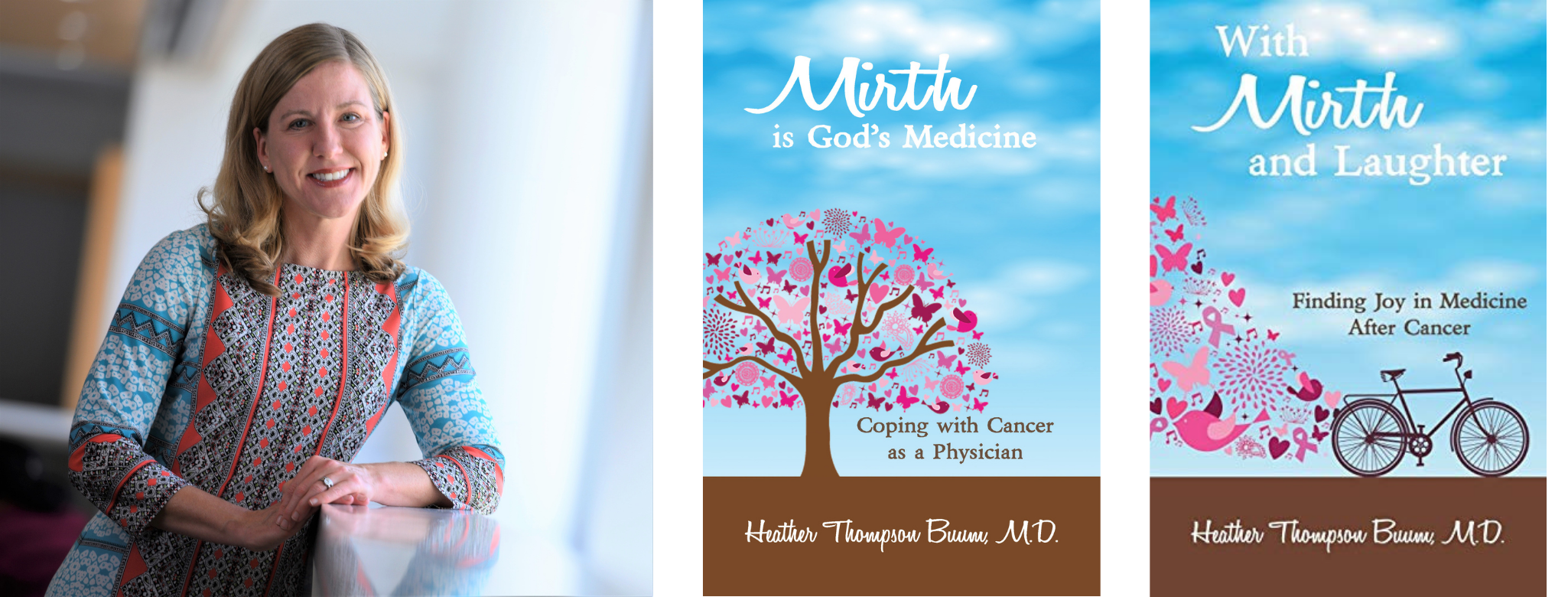
We have all heard the saying, “laughter is the best medicine.” Back in April, I gave a presentation to cancer survivors, highlighting a number of coping mechanisms including writing and also humor. Leading up to this talk, I was reviewing the literature and adding updated content to my slides; at the same time, one of my patients in clinic truly brought this point home for me.
On my schedule was a 68 year old Asian female whose bone density scan revealed fairly severe osteoporosis; three months earlier, she wanted to obtain a second opinion from Mayo, and I signed the referral and arranged a follow up appointment to discuss their recommendations. Imagine my surprise and dismay when I reviewed her chart prior to this follow up clinic visit and saw she had been admitted to the hospital a month ago after a fall resulting in a femur fracture and a broken wrist. Darn it, I thought, that’s exactly what we were trying to prevent with all of this. I walked in the exam room to see her sitting down in front of a wheeled walker with her right arm in a cast. “I’m so sorry this happened!” I said, knowing that this past Minnesota winter was terrible, with so much snow and ice causing numerous falls and injuries for many of my patients.
Believe it or not, she started to laugh. “You want to know the funny part of all this? It was the day before, when I went to the appointment at Mayo. They discussed treatment options, but really emphasized that I needed to start weight bearing exercise. ‘Walking is best! You must start a walking program!’ They continued to stress the importance of it, multiple times. So the very next day, I thought, I’ve really got to get outside and walk, just as the doctor said; and that is when I ventured out, slipped on the ice and broke my hip and wrist! One day later!” We both shared a laugh together at the irony of the situation.
Despite facing this setback, she seemed to be coping well. Her positive attitude and the ability to laugh at an otherwise negative life event truly impressed me. Over the years, I have observed that finding humor even in dark situations can be an excellent coping mechanism. Many of my patients, just like her, will use humor to put things into perspective and ease the tension and anxiety surrounding a new diagnosis, a hospitalization, or surgery. And many physicians, likewise, will use humor to accomplish the very same goal. Relating to my role as course director in the medical school, I have also found that humor improves teaching and learning. In the education literature, studies show the use of humor in the classroom results in improved attention, engagement, and retention of the material, and even leads to better test scores.
As I was preparing for my talk, I reflected on the fact that it was really tough to keep a sense of humor during the pandemic. I thought, in retrospect, which was worse for mental health, covid? Or cancer? At least for me, in many ways, it was covid, especially the early days when there was so much uncertainty and isolation during lockdowns. Still, you can find glimpses of humor relating to the pandemic in terms of covid-19 playlists, featuring hits such as “Who’s Zooming Who” and “Don’t Stand So Close to Me”. Or, circulating on the internet, the top 10 pickup lines of 2020, my favorite being: “Baby, do you need toilet paper? Because I’m your Prince Charmin.”
All of this serves to remind us, laughter really is the best medicine. We should keep humor in our arsenal of weapons against the negativity that can come with our everyday challenges and experiences. Hopefully, by sharing this, we can pause, reflect, and consider ways to incorporate humor into our daily grind, with the goal of making lemonade out of lemons whenever we can.
 Welcome to Doctor Heather